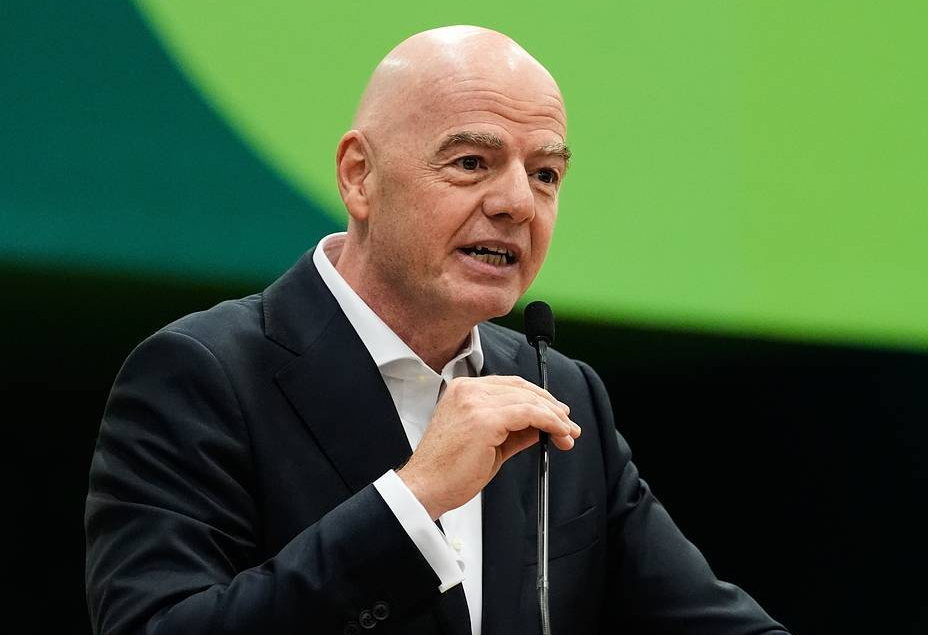
FIFA President, Gianni Infantino has firmly rejected claims that UEFA paid his alleged mistress during his tenure as general secretary of the European football governing body.
On Friday, The Telegraph reported that a woman received a six-figure payment following an alleged relationship with Gianni Infantino.
It is claimed that UEFA financed her MBA at a business school after she departed from the organization.
Infantino, who was employed at UEFA from 2000 until 2016 when he became FIFA president, was purportedly involved in promoting the woman during their relationship.
In a statement, UEFA acknowledged that a payment was made and confirmed awareness of allegations regarding the woman’s relationship with Gianni Infantino.
“The payment was in line with the regulations governing departing staff at the time,” a spokesperson said.
“Since 2016, UEFA has tightened its regulations, with current staff rules reflecting the standards of a modern, high-profile organisation.”
In response to these developments, a FIFA spokesperson stated that Gianni Infantino “strongly denies” the allegations, labeling them as “untrue.”
FIFA President Gianni Infantino categorically denies these allegations
“FIFA President Gianni Infantino categorically denies these allegations, asserting that they are completely false. Any suggestion of inappropriate conduct or breach of statutes or regulations is defamatory,” he said.
He further dismissed claims that senior officials at UEFA had expressed concerns regarding Infantino’s conduct.
He added that no UEFA or FIFA employee has ever filed a complaint against Infantino, while all staff departures and severance packages have been properly approved and handled in line with regulations.
This development occurs in the context of Infantino’s contentious proposal to sell shares in the World Cup to private investors. The FIFA president suggested establishing a subsidiary to manage the commercial aspects of the game while offering up to 20 percent to private equity firms.
He had to abandon his plans following significant opposition from member associations, which included the possibility of a boycott.